
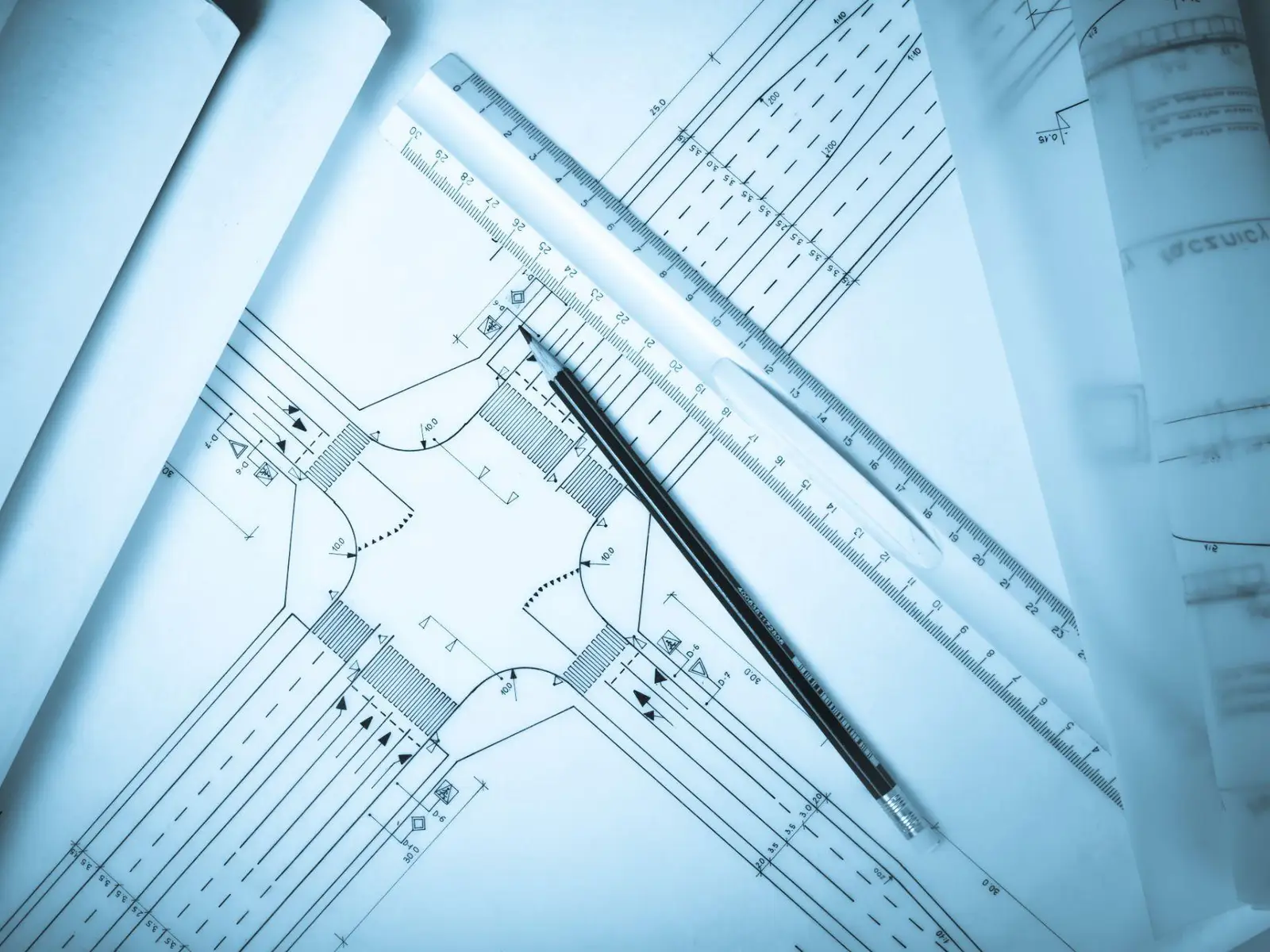
Building roads today takes more than asphalt and concrete; it takes insight. Communities are growing faster, traffic patterns are shifting, and infrastructure budgets are under more scrutiny than ever. The margin for guesswork is shrinking.
That’s why modern road design depends on data. When transportation analytics and civil engineering data work together, they help teams make clearer decisions, reduce risk, and deliver roads that perform better from day one.
In this blog, we’re going to break down how data-driven road design works in practice and why it’s quickly becoming the standard for modern infrastructure.
Why Data-Driven Road Design Matters
Every roadway project carries long-term consequences. A missed assumption can mean years of congestion, higher maintenance costs, or safety concerns that could have been avoided. Data-driven design helps surface those risks early before they’re built into the road itself.
When transportation analytics guide decision-making, agencies can:
- Predict traffic flows before congestion becomes a problem
- Direct funding where it delivers the greatest return
- Improve safety using evidence, not estimates
The shift from reactive fixes to proactive planning saves time, controls costs, and builds public trust, and most times, communities can see the results.
Key Elements of Transportation Planning
Data-driven planning isn’t about drowning teams in numbers or dashboards. It’s about helping us find patterns and craft the right solutions and truly make informed choices. At its core, effective transportation planning relies on three interconnected elements. Let’s take a look at those building blocks:
1. Data Collection & Management
Good decisions start with good data. Everything that follows it (modeling, forecasting, and performance tracking) depends on the quality of the underlying data. The collection and management includes:
- Gathering traffic counts, speed data, and crash reports
- Using GIS layers to map land use, utilities, and environmental constraints
- Storing everything in a centralized platform that’s easy to update and share
When data lives in one place, teams spend less time hunting for answers and more time designing solutions.
2. Forecasting & Modeling
Once the data is in place, analytics bring it to life and really show us what to do with it. That could look like the following:
- Run “what-if” scenarios for population growth, weather events, or road closures
- Use microsimulation tools to test signal timing, turn lanes, and intersection layouts
- Balance peak-hour demand with off-peak efficiency
This forward-looking approach helps prevent today’s fixes from becoming tomorrow’s problems.
3. Standards & Performance Metrics
Data-driven design still has to meet real-world expectations. Clear standards and measurable outcomes ensure designs are both compliant and accountable. This means they must:
- Align designs with AASHTO, ADA, and local standards
- Set clear performance targets for pavement life, safety, and level of service
- Monitor outcomes to refine designs and track return on investment
Everyone wants to see the receipts. That’s true for infrastructure, too.
Integrating Civil Engineering Data into Design
Transportation analytics alone don’t design roads. Engineers do. The real value emerges when analytics are paired with detailed civil engineering data that reflects on-the-ground conditions. These inputs help ensure designs are buildable, durable, and compliant from the start. Key inputs include:
Geotechnical & Environmental Data
- Soil borings, groundwater levels, and floodplain mapping
- Drainage and runoff analysis to prevent erosion and standing water
These insights help designs hold up under real conditions, not just ideal ones.
Utility & Right-of-Way Information
- Mapping buried utilities, easements, and access constraints
- Identifying conflicts early to avoid costly relocations and delays
Early coordination here saves time, money, and headaches later.
Safety & Compliance Records
- Crash heatmaps to identify high-risk corridors
- ADA compliance checks for curb ramps, crossings, and signage
The goal is simple: roads that work for everyone and meet every requirement.
Applying Transportation Analytics in Road Engineering
Analytics support smarter decisions at every phase of a project. They’re not limited to early planning. They support smarter decisions throughout design, construction, and ongoing operations, helping teams refine details, avoid overdesign, and extend asset life.
Digital Modeling & Simulation
- Create digital twins of corridors and intersections
- Test signal phasing, turn movements, and lane configurations before construction begins
It’s easier and far less expensive to adjust a model than a finished roadway.
Material Selection & Optimization
- Use life-cycle cost analysis to compare pavement options
- Balance upfront construction costs with long-term maintenance needs
The right materials today reduce repairs tomorrow.
Real-Time Monitoring & Feedback
- Install Iot sensors in pavement and structures
- Feed live performance data into dashboards for ongoing insight
This feedback loop allows agencies to fine-tune operations and extend infrastructure life.
Implementation Roadmap
For agencies and municipalities looking to adopt a data-driven approach, the process doesn’t have to be overwhelming. A structured roadmap helps translate insight into action while keeping projects aligned with goals and budgets. Our clear, six-step process keeps projects moving:
- Define Goals & KPIs
Clarify safety, mobility, and budget targets. - Gather & Clean Data
Compile traffic counts, soils reports, and utility mapping. - Run Analytics & Build Models
Simulate scenarios for traffic volume, speed, and weather impacts. - Draft Infrastructure Design
Translate insights into alignments, cross-sections, and signal plans. - Pilot & Refine
Test key elements in the field or through micro-simulation. - Construct & Monitor
Track performance and adjust maintenance strategies over time.
Roads Made Smarter with Bonton
Data-driven design isn’t theoretical. Across Louisiana, we’ve seen how pairing analytics with engineering judgment leads to measurable improvements that people feel every day, whether they’re commuting to work, navigating busy corridors, or walking through their neighborhoods. At Bonton Associates, we use data not just to inform design, but to shape better outcomes from planning through construction.
Smarter roads start with smarter decisions.
Turning Information into Insight
Every roadway project generates enormous amounts of information: traffic patterns, crash histories, drainage performance, right-of-way constraints, utility conflicts, environmental conditions, and cost data. The difference between a typical design and a high-performing one is how that information is interpreted and applied.
Our approach centers on assembling and analyzing existing data early, identifying risks, and using objective criteria to evaluate alternatives. This allows us to move beyond assumptions and make design choices that are grounded in real-world conditions. The result is infrastructure that performs better, costs less to maintain, and aligns with how communities actually use their streets.
From Concept to Construction: Data at Every Milestone
As projects advance into design, data continues to guide each phase. Our plans are developed through progressive milestones that allow information to be tested, refined, and validated before final documents are produced.
Throughout this process, we emphasize:
- Right-of-way and utility analysis to minimize conflicts and reduce downstream delays
- Drainage and hydraulic modelling to ensure solutions perform under real conditions
- Cost validation and quantity checks to support reliable budgets and limit change orders
- Constructability reviews to confirm designs can be efficiently built in the field
To maintain quality, we apply a QA/QC process that helps identify issues early, improve constructability, and streamline agency reviews, saving time and reducing risk.